

Introduction
Graduation is an exciting stage, but it can also create an important question: What should I do next?
If you are interested in technology, creativity, social media, websites, advertising and online business, digital marketing can be an interesting career path to explore.
The digital world has created opportunities for businesses of almost every size. Local businesses, startups, e-commerce companies, educational institutes, agencies and personal brands all need an online presence. Because of this, people with digital marketing skills can work across many different industries.
However, starting a digital marketing career is not simply about completing a course and expecting a job immediately. Digital marketing includes many different areas, and beginners often become confused about what they should learn first.
Should you start with SEO?
Should you learn Google Ads?
Is social media marketing enough?
Do you need to learn website development?
How do you get experience when you have no clients?
This guide provides a practical digital marketing roadmap after graduation. It explains the major skills you can learn, how to practice them, how to build a portfolio and how to prepare yourself for entry-level opportunities.
What Is Digital Marketing?

Digital marketing is the process of promoting products, services, businesses or brands through digital channels.
Some common digital marketing channels include:
- Search engines
- Social media platforms
- Websites
- Online advertising
- Content platforms
- Video platforms
Unlike traditional marketing, digital marketing allows businesses to reach specific audiences, measure results and adjust campaigns based on data.
For example, a local business may use:
SEO to appear in Google search results.
Google Ads to reach people searching for specific services.
Instagram and Facebook to build awareness and engagement.
Content marketing to educate potential customers.
Email marketing to maintain relationships with existing customers.
This is why digital marketing is not one single skill. It is a combination of several areas.
Why Choose Digital Marketing After Graduation?
There are several reasons graduates consider digital marketing as a career.
1. Multiple Career Paths
Digital marketing includes different specializations.
You could eventually focus on:
- SEO
- Social media marketing
- Google Ads
- Meta Ads
- Content marketing
- Email marketing
- Affiliate marketing
- Analytics
- E-commerce marketing
- Digital strategy
This means you don’t necessarily have to become an expert in everything.
You can begin with a broad understanding and later specialize in an area that interests you.
2. Practical Skills Matter
Digital marketing is a practical field.
Knowing definitions is useful, but employers and clients also want to know whether you can actually apply what you’ve learned.
For example, instead of only knowing what keyword research means, you can practice finding keywords for a sample website.
Instead of only learning about Google Ads, you can create a practice campaign and understand its structure.
Instead of simply studying social media marketing, you can create a sample content calendar.
This practical approach can make your learning more valuable.
3. Opportunities Across Industries
Digital marketing is not limited to one industry.
You can find digital marketing applications in:
- Education
- Healthcare
- Real estate
- E-commerce
- Finance
- Hospitality
- Food
- Technology
- Fashion
- Local businesses
Therefore, your digital marketing skills can be applied to many different types of businesses.
Digital Marketing Roadmap for Beginners
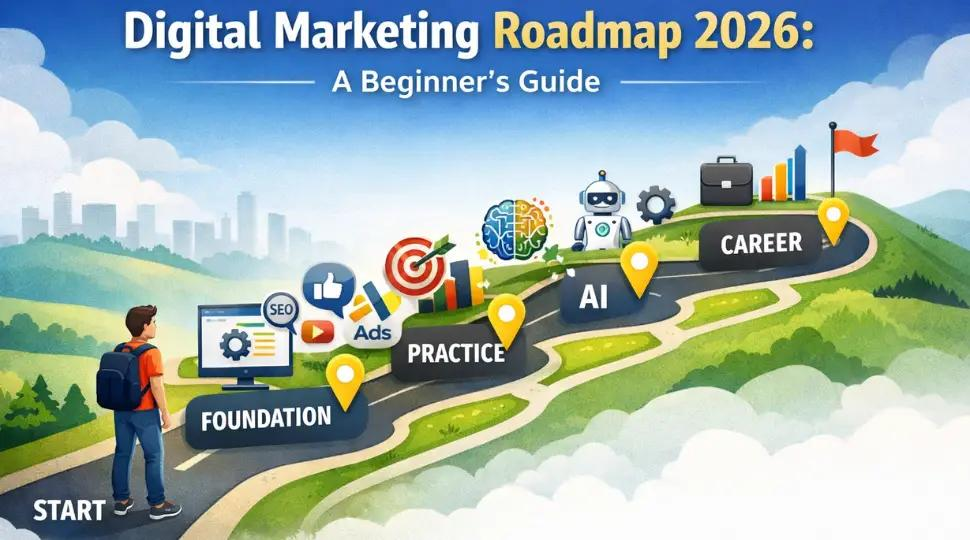
If you are starting from zero, don’t try to master every digital marketing skill simultaneously.
Follow a structured roadmap.
Step 1: Understand Digital Marketing Fundamentals
Before specializing, understand the basic concepts.
Learn:
- What digital marketing is
- Digital marketing channels
- Target audience
- Customer journey
- Marketing funnel
- Conversion
- Lead generation
- Branding
- Organic marketing
- Paid marketing
- Content marketing
You should understand how different channels work together.
For example:
SEO → Website Traffic → Content → Lead → Conversion
Similarly:
Google Ads → Landing Page → Lead Form → Follow-up → Customer
Understanding these relationships will help you think like a marketer rather than simply learning individual tools.
Step 2: Learn SEO

SEO, or Search Engine Optimization, is one of the most useful skills for a beginner to learn.
SEO focuses on improving a website’s visibility in organic search results.
Start with the fundamentals.
Learn Keyword Research
Understand:
- Search intent
- Short-tail keywords
- Long-tail keywords
- Commercial keywords
- Informational keywords
- Local keywords
- Keyword competition
For example, instead of targeting only:
digital marketing
you could target a more specific phrase such as:
digital marketing course in Delhi
or:
digital marketing career after graduation
The goal is to understand what people are actually searching for and create useful content around those needs.
Learn On-Page SEO
Learn how to optimize:
- Page titles
- Meta descriptions
- Headings
- URLs
- Images
- Alt text
- Internal links
- Content structure
You should also understand how to make content useful and easy to read.
Learn Technical SEO Basics
You don’t need to become a technical developer immediately.
Start by understanding:
- Website speed
- Mobile responsiveness
- Indexing
- Crawling
- XML sitemaps
- Robots.txt
- HTTPS
- Broken links
- Canonical URLs
Once you understand the fundamentals, you can gradually move into advanced SEO.
Step 3: Learn Content Marketing
Content is an important part of digital marketing.
Businesses need content for websites, search engines, social media and other platforms.
As a beginner, practice creating:
- Blog articles
- Social media captions
- Website pages
- Product descriptions
- Short-form content
- Educational posts
- Marketing copy
Don’t focus only on inserting keywords.
Good content should answer the reader’s question clearly.
For example, if someone searches:
“How to learn SEO as a beginner?”
a useful article should actually explain the learning process rather than repeatedly mentioning the keyword.
This is where SEO and content marketing work together.
Step 4: Learn Social Media Marketing

Social media is another major area of digital marketing.
Start by learning how platforms such as Instagram, Facebook and LinkedIn are used for marketing.
Understand:
- Audience research
- Content planning
- Content calendars
- Captions
- Hashtags
- Engagement
- Organic reach
- Social media analytics
- Brand consistency
Practice creating a simple monthly content calendar.
For example:
| Day | Content Type |
|---|---|
| Monday | Educational post |
| Tuesday | Tip |
| Wednesday | Short video |
| Thursday | Industry information |
| Friday | Carousel |
| Saturday | Engagement post |
| Sunday | Weekly recap |
The exact schedule can change depending on the business and audience.
The important part is learning how to create content with a purpose.
Step 5: Learn Google Ads and Paid Advertising

After understanding organic marketing, you can begin learning paid advertising.
Google Ads allows businesses to advertise across Google’s advertising ecosystem.
Start with:
- Campaign structure
- Keywords
- Search intent
- Ad groups
- Ad copy
- Landing pages
- Bidding concepts
- Conversion tracking
- Quality Score
- Basic campaign optimization
As a beginner, don’t immediately focus on complicated campaigns.
Understand the basic journey:
Search → Advertisement → Landing Page → Action
For example, someone searches:
best digital marketing course in Delhi
They see an advertisement.
They click the ad.
They reach a landing page.
They submit a form.
This is the basic concept behind many lead-generation campaigns.
Step 6: Learn Meta Ads
Meta advertising can be useful for businesses that want to reach audiences through Facebook and Instagram.
Learn the fundamentals of:
- Campaign objectives
- Campaign structure
- Audience targeting
- Ad sets
- Creatives
- Primary text
- Headlines
- Calls to action
- Lead forms
- Budgeting
- Basic performance metrics
If you don’t have a client yet, you can create a practice campaign without publishing it.
This is an excellent way for beginners to understand the interface and campaign structure.
Step 7: Learn WordPress and Basic Website Skills
A digital marketer doesn’t necessarily need to become a professional web developer.
However, basic website knowledge can be extremely useful.
Learn:
- WordPress basics
- Pages and posts
- Themes
- Plugins
- Elementor
- Menus
- Forms
- Basic website structure
- Image optimization
- Basic SEO settings
Understanding websites helps you communicate better with developers and understand how marketing changes affect a website.
It can also allow you to create your own portfolio.
Step 8: Learn Analytics
Digital marketing is not just about creating campaigns.
You also need to understand performance.
Start learning important metrics such as:
- Impressions
- Clicks
- Click-through rate
- Conversion rate
- Cost per click
- Cost per lead
- Engagement rate
- Organic traffic
- Bounce/engagement signals
- Return on ad spend
For example, if an advertisement receives many impressions but very few clicks, you might investigate the creative, targeting or messaging.
If a landing page receives many visitors but very few conversions, the landing page experience may need improvement.
This analytical thinking is an important part of becoming a better marketer.
Step 9: Practice With Your Own Website
One of the best ways to learn digital marketing is to build and optimize your own website.
You don’t need to wait for a client.
For example, you can create a personal portfolio website and practice:
- Keyword research
- SEO titles
- Meta descriptions
- Blog writing
- Internal linking
- Image optimization
- Website structure
- Social media integration
- Content planning
This gives you something concrete to discuss during interviews.
Instead of saying:
“I have studied SEO.”
you can say:
“I learned SEO and applied it to my own website by creating optimized pages and blog content.”
That is a much stronger learning story.
Step 10: Build a Digital Marketing Portfolio
One of the biggest challenges for beginners is the question:
“How can I show experience if I don’t have clients?”
The answer is to build practical projects.
Your portfolio can contain:
SEO Project
Create a keyword research report for a sample website.
Content Project
Write an SEO-optimized blog and explain your keyword strategy.
Social Media Project
Create a 7-day or 30-day content calendar for a hypothetical business.
Google Ads Project
Create a sample campaign structure with keywords, ad groups and ad copy.
Meta Ads Project
Create a practice campaign and explain the objective, audience and creative.
Website Project
Build a WordPress website and document the process.
These projects demonstrate your ability to apply concepts.
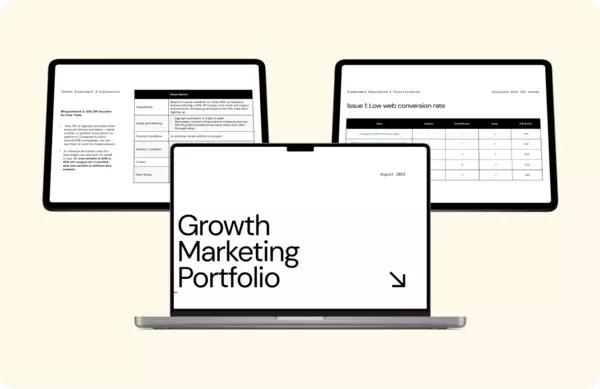
What Should You Put in Your Digital Marketing Portfolio?
A beginner portfolio doesn’t need to be enormous.
A simple portfolio can include:
1. About Me
Introduce yourself and explain your career goal.
2. Skills
List the digital marketing areas you are learning and practicing.
3. Projects
Show your practical work.
4. Case Studies
Explain what you did, why you did it and what you learned.
5. Blog
Publish useful digital marketing articles.
6. Contact
Give potential employers or clients a way to reach you.
Your portfolio should focus on evidence of learning and practical ability, rather than exaggerated claims.
How to Get Your First Digital Marketing Experience
After learning the basics, start looking for opportunities to practice.
You can explore:
- Internships
- Freelance projects
- Volunteer projects
- College projects
- Personal projects
- Small-business projects
- Agency internships
- Remote entry-level opportunities
You can also approach a local business and offer to create a small sample audit.
For example:
Website SEO Audit
You could identify:
- Missing meta descriptions
- Poor page titles
- Slow pages
- Missing image alt text
- Content opportunities
- Broken links
- Keyword opportunities
This gives you a practical project to add to your portfolio.
Digital Marketing Skills You Should Develop
A strong beginner doesn’t need to master everything immediately.
Focus on these core skills:
Technical Skills
- SEO
- Keyword research
- Google Ads
- Meta Ads
- WordPress
- Elementor
- Google Analytics
- Search Console
- Basic HTML/CSS understanding
Creative Skills
- Content writing
- Copywriting
- Social media content
- Basic graphic design
- Video content ideas
Analytical Skills
- Data interpretation
- Campaign analysis
- Keyword analysis
- Competitor research
- Performance reporting
Soft Skills
Don’t underestimate:
- Communication
- Research
- Time management
- Problem solving
- Creativity
- Adaptability
- Presentation skills
Digital marketing combines technical, creative and analytical thinking.
A Simple 6-Month Digital Marketing Learning Plan
If you’re starting from the beginning, you can organize your learning into stages.
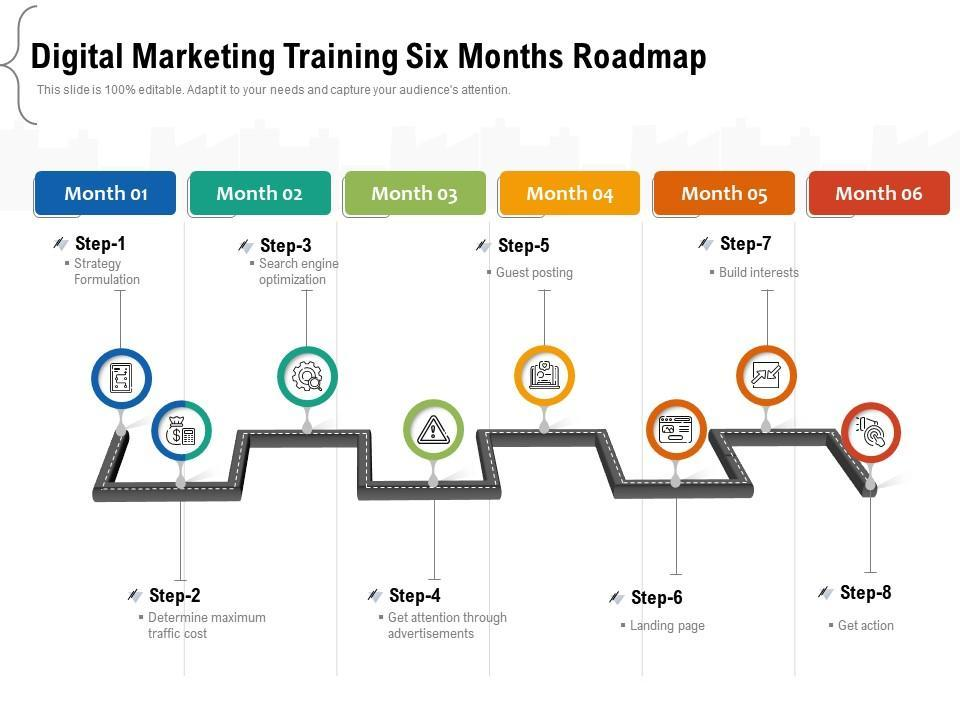
Month 1 — Fundamentals
Learn:
- Digital marketing basics
- Marketing funnel
- Audience research
- Content marketing
- Basic SEO
Create your first practice project.
Month 2 — SEO
Focus on:
- Keyword research
- On-page SEO
- Technical SEO basics
- SEO content
- Internal linking
Create an SEO project.
Month 3 — Social Media
Learn:
- Content strategy
- Content calendars
- Social media analytics
Create a sample social media strategy.
Month 4 — Paid Advertising
Learn:
- Google Ads
- Meta Ads
- Campaign structure
- Keywords
- Audience targeting
- Ad creatives
- Conversion concepts
Create practice campaigns.
Month 5 — Websites & Analytics
Learn:
- WordPress
- Elementor
- Website optimization
- Google Analytics
- Search Console
- Basic reporting
Apply these skills to your own website.
Month 6 — Portfolio & Job Preparation
Build:
- Portfolio website
- 3–5 projects
- SEO case study
- Social media case study
- Paid advertising project
- Resume
- LinkedIn profile
Then start applying for internships, entry-level roles and suitable freelance opportunities.
Common Mistakes Beginners Should Avoid
1. Trying to Learn Everything at Once
Digital marketing is huge.
Don’t try to master SEO, Google Ads, Meta Ads, email marketing, affiliate marketing, analytics and web development simultaneously.
Build your foundation first.
2. Only Watching Courses
Watching tutorials is useful, but practice is essential.
After learning something, create a small project around it.
3. Copying Other People’s Work
Use other websites for inspiration, but create your own projects and explanations.
4. Using Fake Experience
Never claim clients, revenue or years of experience that you don’t have.
A transparent beginner portfolio is more trustworthy.
5. Ignoring SEO
Even if your main interest is social media or advertising, understanding SEO can strengthen your overall digital marketing knowledge.
6. Not Measuring Results
Always ask:
What was the goal?
What happened?
What can be improved?
This develops your marketing mindset.
Is a Digital Marketing Course Necessary?
A course can provide structure, but it isn’t the only way to learn digital marketing.
You can learn through:
- Online courses
- Official platform resources
- Blogs
- YouTube tutorials
- Practice projects
- Personal websites
- Internships
- Mentorship
- Real-world assignments
If you choose a course, look for one that includes practical assignments and projects rather than only lectures.
The most important thing is not simply having a certificate.
It is being able to demonstrate what you can actually do.
How to Prepare for a Digital Marketing Interview
Before applying for jobs, prepare answers for questions such as:
What is SEO?
What is keyword research?
What is the difference between SEO and PPC?
What is a marketing funnel?
How would you improve a website’s organic traffic?
What is CTR?
What is conversion rate?
How would you create a social media strategy?
How do Google Ads work?
How would you analyze a competitor?
But don’t only memorize definitions.
Practice explaining concepts using examples.
For example, if asked about SEO, explain how you would actually optimize a website.
That demonstrates practical thinking.
How Nexora Digital Fits Into My Learning Journey
My own website, Nexora Digital, is part of my digital marketing learning journey.
Instead of treating a portfolio website as just an online resume, I can use it as a practical environment to learn and demonstrate digital marketing.
Through the website, I can practice:
- SEO
- Content writing
- Keyword research
- Website optimization
- Blog creation
- Internal linking
- User experience
- Social media integration
- Personal branding
This approach is especially useful for beginners because the website itself can become a portfolio project.
Final Thoughts
Starting a digital marketing career after graduation does not require you to know everything from day one.
The better approach is to learn step by step, practice what you learn and document your progress.
Start with digital marketing fundamentals.
Then develop your SEO knowledge.
Learn content marketing and social media.
Move into Google Ads and Meta Ads.
Understand WordPress and analytics.
Most importantly, create practical projects.
Your first project doesn’t have to be perfect.
Your first website doesn’t have to look like a multinational company’s website.
Your first SEO campaign doesn’t have to generate thousands of visitors.
Your goal at the beginning is to learn, practice, analyze and improve.
Over time, those small projects can become a professional portfolio.
If you’re a graduate or beginner wondering how to enter digital marketing, start today with one simple project. Build something, optimize it, document what you learned and use that experience to create your next project.
A successful digital marketing career is not built in one day. It is built through continuous learning, practical experience and consistent improvement.
Frequently Asked Questions
1. Can I start a digital marketing career after graduation?
Yes. Graduates from different educational backgrounds can learn digital marketing. The important factors are practical skills, continuous learning, communication and the ability to demonstrate your work.
2. Is digital marketing difficult for beginners?
The basics can be learned by beginners, but digital marketing contains many different areas. Learning one skill at a time and practicing regularly can make the process easier.
3. Which digital marketing skill should I learn first?
Start with digital marketing fundamentals and then learn SEO, content marketing and social media basics. After building your foundation, you can move toward paid advertising and analytics.
4. Can I get a digital marketing job without experience?
Entry-level opportunities and internships are available to beginners, but competition can be strong. A portfolio containing practical projects can help demonstrate your skills when you don’t have professional client experience.
5. Do I need a digital marketing degree?
A specific degree is not always necessary. Practical skills, projects, communication and a strong understanding of digital marketing concepts can be important for entry-level opportunities.
6. How long does it take to learn digital marketing?
There is no fixed timeframe. You can learn the fundamentals within a few months, but developing professional-level skills requires continuous practice and experience.
7. Should I learn SEO or Google Ads first?
SEO is a useful starting point because it helps you understand websites, keywords, search intent and content. You can then learn Google Ads and understand how paid search differs from organic search.
8. How can I gain digital marketing experience without clients?
Create your own projects. Build a website, conduct keyword research, write SEO blogs, create sample ad campaigns, prepare social media strategies and document your results and learning.
9. Is WordPress useful for digital marketers?
Yes. Understanding WordPress can help digital marketers work with website content, landing pages, blogs, SEO elements and basic website optimization.
10. What should a beginner’s digital marketing portfolio contain?
A beginner portfolio can include an introduction, skills, SEO projects, content projects, social media strategies, advertising practice projects, website projects, case studies and a blog.